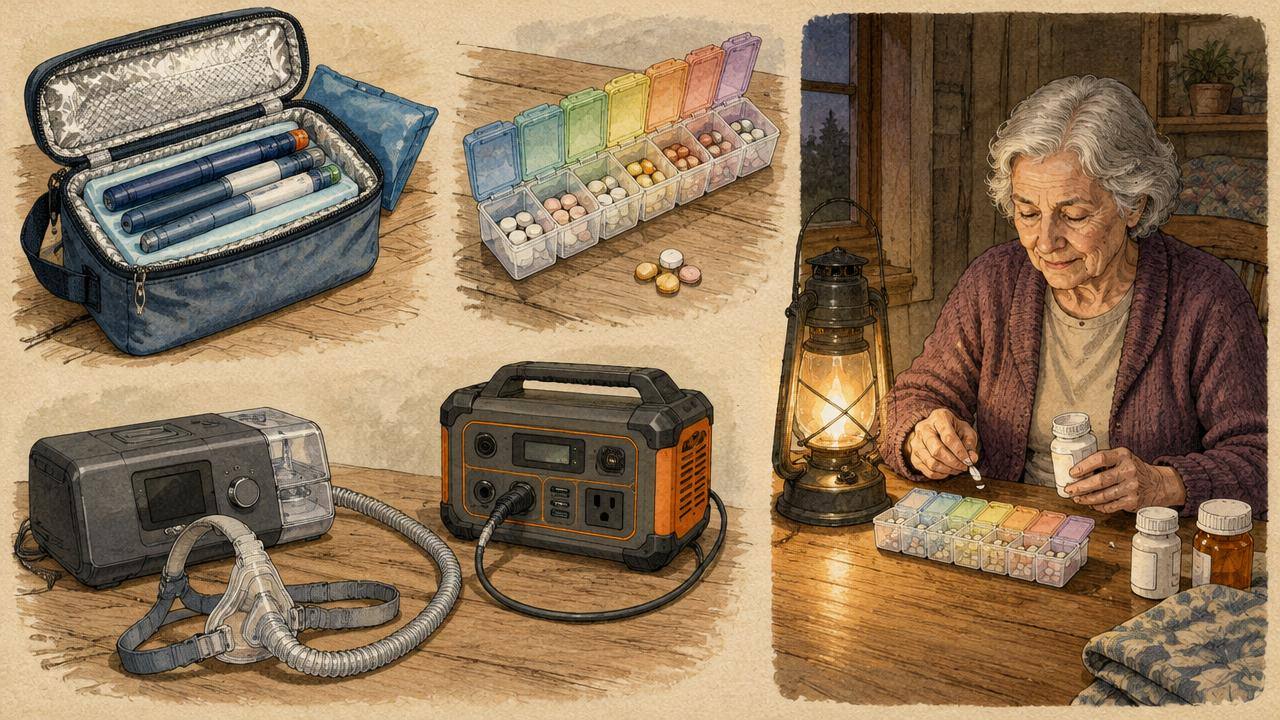
Building a Personal Support Network
For older adults and people with disabilities: who will check on you, help evacuate, and know your needs.
Question 1
The goal
Have at least three people who can help in an emergency and know your specific needs.
Question 2
Materials
- List of needs (mobility, medicines, equipment, communication)
- Contact list
- Spare keys
- Copies of medical info
Question 3
Substitutes
- Neighbors, faith groups, community volunteers
- Utility medical priority registry
- Local emergency special-needs registry
Where to find it
| Material | Household | Wilderness | Urban / scavenged |
|---|---|---|---|
| Network | Family, neighbors | N/A | Senior center, faith community |
Question 4
Step by step
- 1
List what you'd need help with: evacuating, powering equipment, refrigerating medicine, communicating, caring for a service animal.
- 2
Ask at least three people (not all in your building) to be your support network.
- 3
Share your needs list, medicine list, and how to operate your equipment.
- 4
Give a trusted person a spare key.
- 5
Agree on check-in: they contact you within a set time after an emergency.
- 6
Register with your utility's medical certificate program and your local special-needs registry if available.
- 7
Keep spare batteries or manual alternatives (manual wheelchair, extra hearing aid batteries, glasses).
- 8
Practice evacuation together, including stairs if elevators fail.
- 9
Update the list when medicines or equipment change.
Saved steps go to My Survival Notebook.
Question 5
The science
People with disabilities and older adults face higher risks in disasters, often due to isolation. Pre-arranged networks shorten the time to help.
Question 6
Dangers & limits
- Don't rely on one person.
- Keep medicines and equipment labeled with your name.
- Know which shelters can support your needs.
Question 7
How you know it worked
Three people know your needs and have practiced helping you.