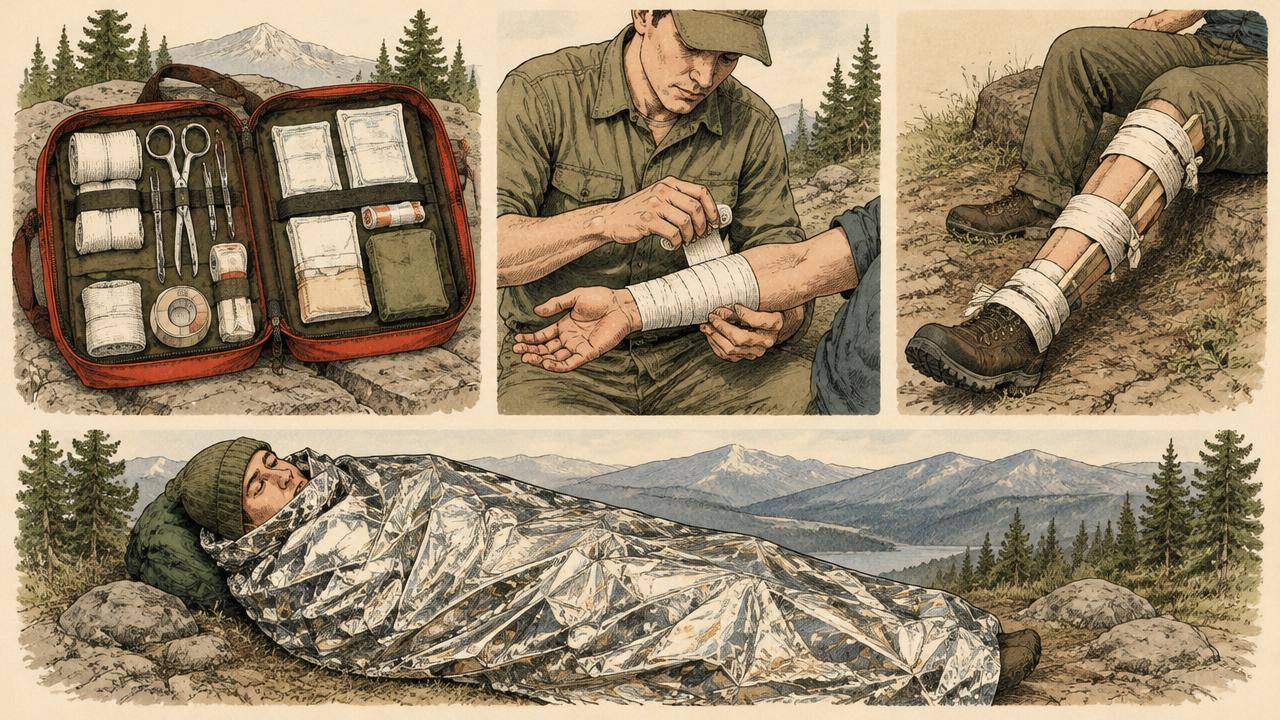
Stop the Bleed: Direct Pressure and Tourniquets
Severe bleeding can kill in minutes. Pressure, packing, and when to use a tourniquet.
Question 1
The goal
Control life-threatening bleeding until emergency help arrives.
Question 2
Materials
- Disposable gloves
- Gauze or hemostatic gauze
- Commercial tourniquet (CAT or SOF-T)
- Pressure bandage
- Phone
Question 3
Substitutes
- Clean cloth or T-shirt for pressure
- Improvised tourniquet: 2 in (5 cm) wide strap + stick windlass (last resort)
- Plastic bag over hands if no gloves
Where to find it
| Material | Household | Wilderness | Urban / scavenged |
|---|---|---|---|
| Tourniquet | First-aid kit (buy one) | Trauma kit | Public 'Stop the Bleed' kits |
| Gauze | Clean towels, T-shirts | Bandana | Pharmacy |
Question 4
Step by step
- 1
Make sure the scene is safe for you. Put on gloves.
- 2
Call 911 (or have someone call) immediately.
- 3
Find the source: expose the wound and look for blood that is spurting, pooling, or soaking clothing.
- 4
Press hard directly on the wound with gauze or cloth using both hands and your body weight.
- 5
For deep wounds in the arm, leg, neck, armpit or groin, pack gauze tightly into the wound with your fingers until full, then keep pressing for at least 3 minutes.
- 6
If an arm or leg keeps bleeding heavily, apply a tourniquet 2–3 in (5–7 cm) above the wound, not on a joint.
- 7
Pull the strap tight, twist the windlass until bleeding stops, and lock it. It will hurt — that's normal.
- 8
Write the time it was applied on the tourniquet or the person's skin.
- 9
Do NOT loosen or remove it — leave that to medical professionals.
- 10
Keep the person warm and lying down, and keep pressure until help arrives.
Saved steps go to My Survival Notebook.
Question 5
The science
Pressure squeezes blood vessels closed and lets clotting begin. A tourniquet compresses the artery against bone, stopping flow to the limb. Modern evidence shows limbs usually survive tourniquets for 2 hours or more.
Question 6
Dangers & limits
- Always call emergency services.
- Narrow cords, wire or belts make poor tourniquets and can injure tissue.
- Wear gloves — protect yourself from bloodborne disease.
Question 7
How you know it worked
Bleeding stops or slows to oozing, and help has been called.