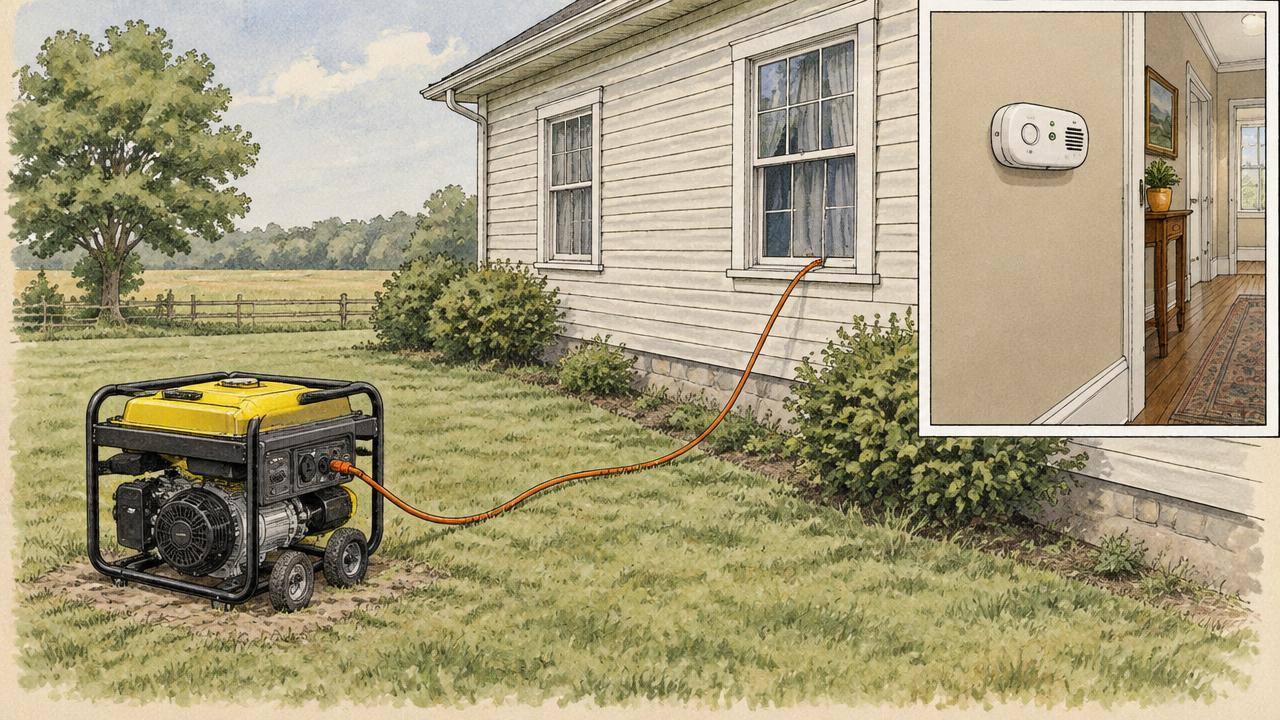
Running a Generator Safely
Generators kill people every hurricane season. Placement is everything.
Question 1
The goal
Power essentials without carbon monoxide (CO) poisoning or electrocution.
Question 2
Materials
- Portable generator
- Heavy-duty outdoor extension cords
- Battery-powered CO alarms
- Fuel in approved cans
Question 3
Substitutes
- Portable power station (battery) — safe indoors
- Car with inverter, car parked outdoors only
Where to find it
| Material | Household | Wilderness | Urban / scavenged |
|---|---|---|---|
| CO alarm | Check hallway ceilings/walls | Portable CO alarm for tents/cabins | Hardware store, pharmacy |
| Outdoor extension cord | Garage, holiday lights box | — | Hardware store (12-gauge, outdoor rated) |
Question 4
Step by step
- 1
Place the generator OUTSIDE, at least 20 ft (6 m) from the house, exhaust pointed away from doors and windows.
- 2
Never run it in a garage, carport, basement or shed — even with the door open.
- 3
Install battery CO alarms on every level and outside sleeping areas.
- 4
Run outdoor-rated extension cords to appliances. Never plug into a wall outlet (backfeeding can kill line workers).
- 5
Turn it off and let it cool before refueling. Store fuel away from the house.
Saved steps go to My Survival Notebook.
Question 5
The science
CO is an odorless gas that binds to hemoglobin about 200× more strongly than oxygen, starving the body of oxygen. Open doors do not clear it fast enough.
Question 6
Dangers & limits
- Headache, dizziness, nausea, confusion = get to fresh air and call 911.
- Sleeping people can die without waking.
- Wet conditions: electrocution risk — keep generator dry and covered.
Question 7
How you know it worked
CO alarms stay silent, generator is 20+ ft away outdoors, nobody has symptoms.
My notes
Local laws: Some areas require transfer switches installed by a licensed electrician for home connection.