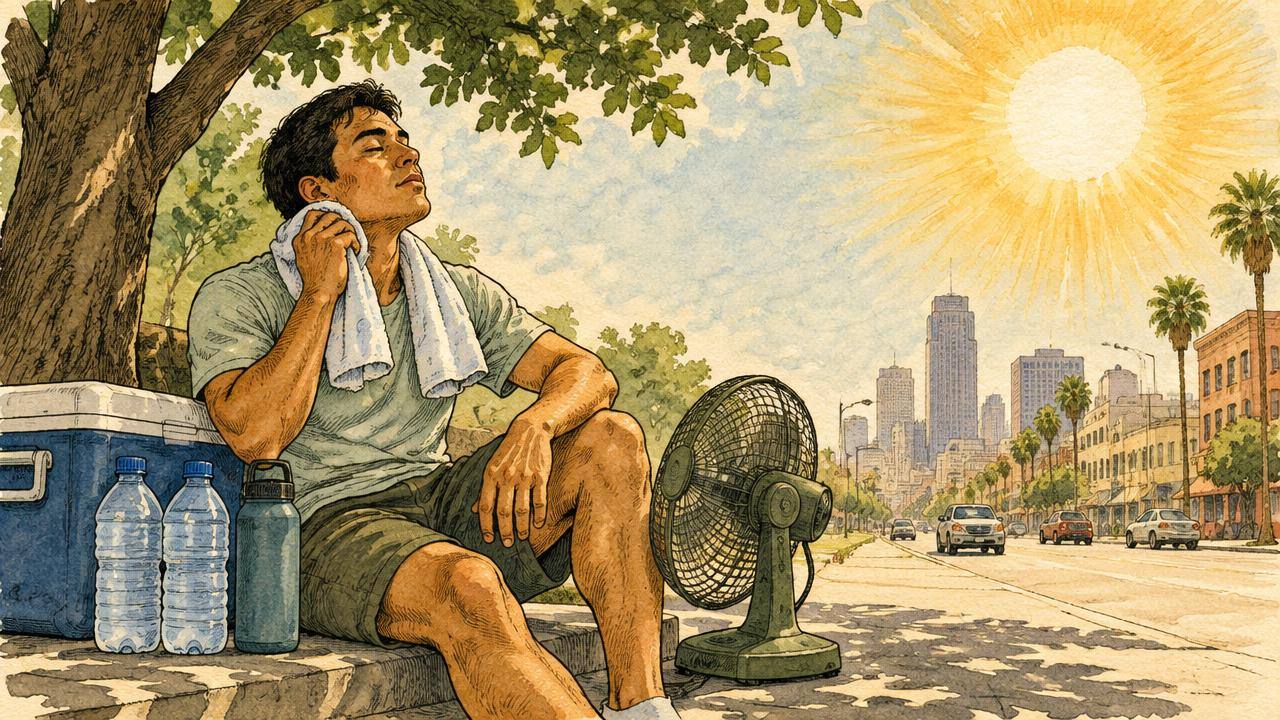
Heat Exhaustion vs. Heat Stroke — and Rapid Cooling
Heat stroke is an emergency. Recognize it and cool the person fast.
Question 1
The goal
Tell the difference between heat exhaustion and heat stroke and respond correctly.
Question 2
Materials
- Water
- Cool wet towels
- Ice packs
- Fan
- Shade
Question 3
Substitutes
- Tarp for shade
- Spray bottle
- Tub or kiddie pool of cool water
Where to find it
| Material | Household | Wilderness | Urban / scavenged |
|---|---|---|---|
| Cooling | Bathtub, wet towels | Stream, shade | Cooling center |
Question 4
Step by step
- 1
Heat exhaustion signs: heavy sweating, cool clammy skin, weakness, dizziness, nausea, headache, fast weak pulse.
- 2
Heat stroke signs: confusion, slurred speech, fainting, seizures, very high body temperature (103°F/39.4°C+), hot skin that may be dry or sweaty.
- 3
For heat stroke, call 911 immediately.
- 4
Move the person to shade or a cool place.
- 5
Cool them fast: immerse in cool water up to the neck if possible, or soak with water and fan constantly.
- 6
Place ice packs or cold wet towels on the neck, armpits and groin.
- 7
Do not give fluids to a confused or unconscious person.
- 8
For heat exhaustion: rest in shade, loosen clothes, sip water or electrolyte drink, cool with wet cloths.
- 9
If heat exhaustion symptoms worsen or last more than 1 hour, get medical help.
Saved steps go to My Survival Notebook.
Question 5
The science
When the body can't shed heat through sweat and blood flow to skin, core temperature rises and proteins in the brain and organs begin to fail. Rapid cooling within 30 minutes greatly improves survival.
Question 6
Dangers & limits
- Heat stroke is life-threatening — call 911.
- Older adults, infants and people on certain medications are at higher risk.
- Never leave anyone in a parked car.
Question 7
How you know it worked
You can name the warning signs and the cooling steps from memory.