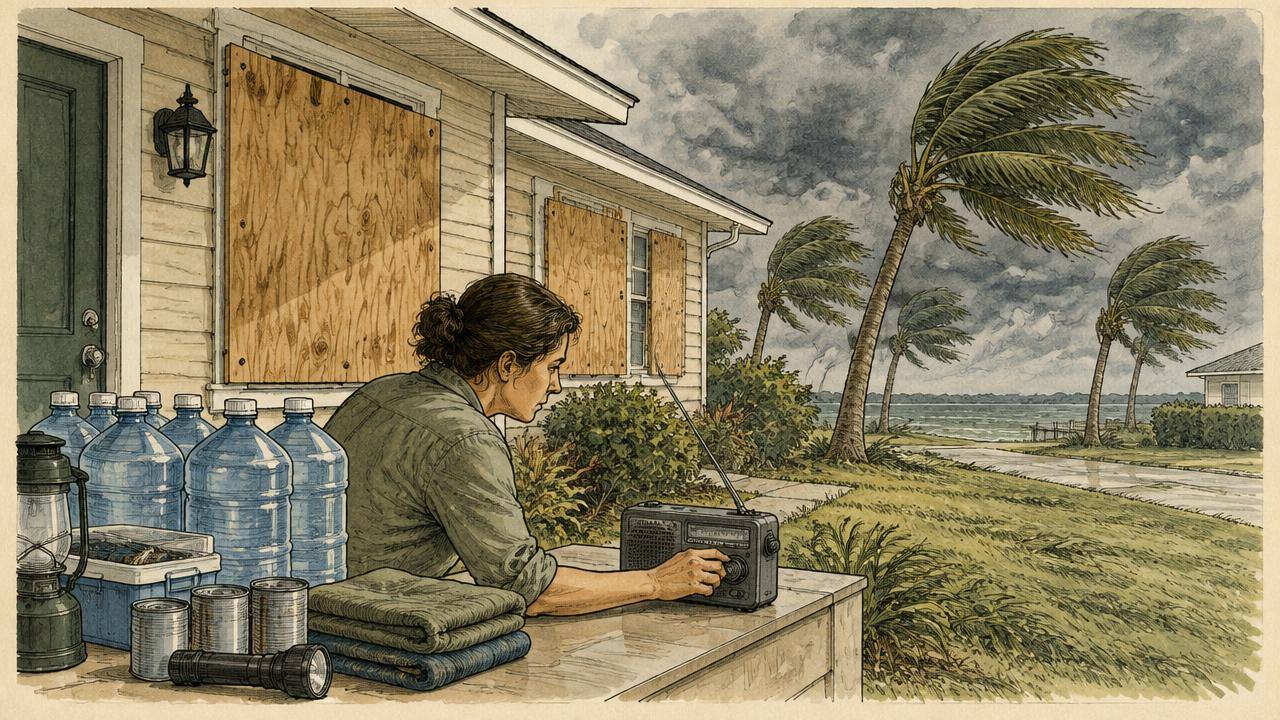
Hurricane Prep: The 72 Hours Before Landfall
A timed checklist from watch to landfall: water, power, windows, documents and the evacuation decision.
Question 1
The goal
Have your home, family and supplies ready before a hurricane arrives, and know whether to stay or go.
Question 2
Materials
- Water: 1 gallon (4 L) per person per day for 7+ days
- Non-perishable food for 7 days
- Flashlights, headlamps, batteries
- Battery/crank NOAA radio
- Charged power banks/power station
- Plywood or storm shutters
- Waterproof bag for documents
- Prescription medicines (2-week supply)
Question 3
Substitutes
- Fill bathtub for flushing/cleaning water
- Freeze water bottles as ice packs
- Zip-top bags for documents
- Phone photos of documents uploaded to cloud
Where to find it
| Material | Household | Wilderness | Urban / scavenged |
|---|---|---|---|
| Window protection | Pre-cut plywood, shutters | N/A | Hardware store (sells out early) |
| Water containers | Bathtub, pots, clean jugs | Water bladders | Grocery store |
| Waterproof bag | Zip-top bags | Dry bag | Dollar store |
Question 4
Step by step
- 1
72 hours out (hurricane WATCH): look up your evacuation zone on your county website and decide where you'd go — a friend inland is better than a shelter.
- 2
Refill prescriptions, get cash in small bills, and fill vehicle gas tanks — stations close and pumps need power.
- 3
Buy or check water and food for 7 days; include pet food and baby supplies.
- 4
48 hours out: bring in or tie down outdoor furniture, grills, trash cans and anything that can become a flying object.
- 5
Install shutters or pre-cut plywood over windows (screwed into framing, not taped — tape does nothing).
- 6
Charge every phone, power bank, laptop and power station to 100%.
- 7
Turn fridge and freezer to their coldest settings; fill empty space with water bottles to hold cold longer.
- 8
Put documents (IDs, insurance, deeds, medical lists) in a waterproof bag; photograph every room for insurance.
- 9
36 hours out (WARNING): if officials order your zone to evacuate, leave. Storm surge, not wind, causes most deaths.
- 10
If staying: fill bathtubs and buckets for flushing, pick an interior windowless room on the lowest floor that won't flood as your safe room.
- 11
During the storm stay inside, away from windows, even during the calm eye — the other side of the eyewall is coming.
- 12
After: wait for the all-clear, avoid floodwater (sewage, live wires), and run generators only outdoors, 20 ft from the house.
Saved steps go to My Survival Notebook.
Question 5
The science
Storm surge is ocean water pushed ashore by wind and low pressure; it can rise many feet in minutes. Wind pressure rises with the square of wind speed, so a 150 mph wind pushes about 4× harder than a 75 mph wind — that's why openings must be covered.
Question 6
Dangers & limits
- Never ignore evacuation orders in surge zones.
- Carbon monoxide from generators kills people after every major storm.
- Floodwater hides live wires, debris and sewage; 6 in (15 cm) of moving water can knock you down.
- Wear gloves, boots and eye protection during cleanup.
Question 7
How you know it worked
Windows covered, 7 days of supplies ready, devices charged, documents sealed, and a written stay-or-go decision based on your zone.