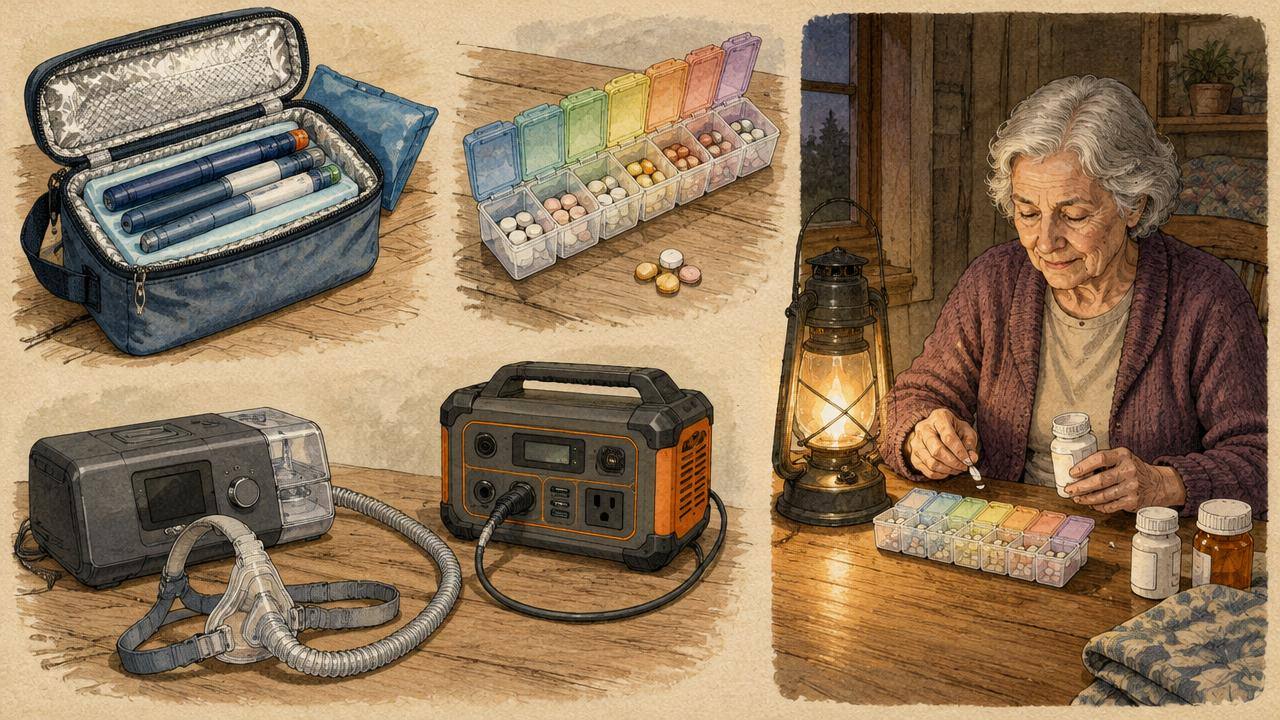
Keeping Insulin and Medicines Cool Without Power
How long insulin lasts at room temperature and safe ways to keep refrigerated medicines cool.
Question 1
The goal
Protect temperature-sensitive medicines through an outage.
Question 2
Materials
- Insulated cooler
- Gel packs or ice
- Thermometer
- Evaporative cooling wallet (e.g. FRIO style)
- Medication list
Question 3
Substitutes
- Clay-pot evaporative cooler (zeer)
- Wet cloth wrap in shade
- Cooler of cool (not frozen) water
Where to find it
| Material | Household | Wilderness | Urban / scavenged |
|---|---|---|---|
| Cooling | Cooler + gel packs | Cool stream (sealed) | Pharmacy, cooling center |
Question 4
Step by step
- 1
Read your medicine's label or ask your pharmacist how long it is stable unrefrigerated. Many insulins last about 28 days at room temperature up to about 86°F (30°C).
- 2
Keep a written list of medicines, doses and prescriber contacts.
- 3
During an outage, keep unopened insulin in the closed fridge for the first few hours.
- 4
For longer outages, move it to a cooler with ice packs — but wrap the insulin so it never touches ice and never freezes.
- 5
Keep a thermometer in the cooler and aim for 36–46°F (2–8°C).
- 6
If no ice, use an evaporative cooling wallet: soak it in water as directed, place insulin inside, keep in shade.
- 7
Keep medicines out of direct sun, hot cars and windowsills.
- 8
Don't use insulin that has frozen, is cloudy when it should be clear, or has clumps.
- 9
Contact your pharmacist or doctor for replacement and guidance — many states allow emergency refills.
Saved steps go to My Survival Notebook.
Question 5
The science
Insulin is a protein; heat breaks its structure and freezing damages it permanently. Evaporating water absorbs heat, cooling what's inside.
Question 6
Dangers & limits
- Always follow your prescriber or pharmacist's advice.
- Seek emergency care for signs of very high or low blood sugar.
- Frozen insulin must be discarded.
Question 7
How you know it worked
Medicines stayed within their labeled temperature range for the whole outage.