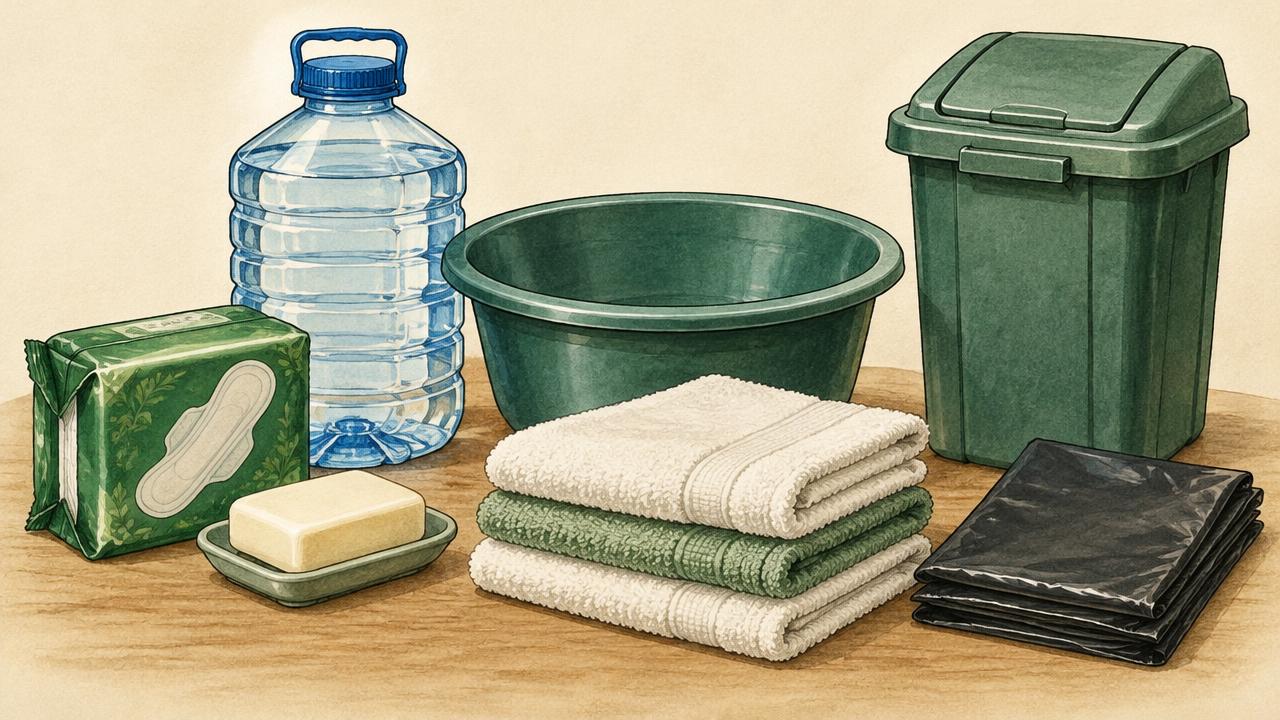
Menstrual Hygiene Without Running Water
Plan clean hands, suitable menstrual products, privacy, and safe disposal during a water outage.
Awaiting expert review — this reliability rating is not reviewer sign-off.
Question 1
The goal
Maintain a clean, comfortable menstrual-care routine while plumbing or safe running water is unavailable.
Question 2
Materials
- Your usual menstrual products
- Soap and safe clean water
- Hand sanitizer containing at least 60% alcohol
- Clean underwear
- Opaque disposal bags and a lined lidded bin
Question 3
Substitutes
- Disposable pads when reusable products cannot be washed and dried safely
- A clean pour bottle for handwashing instead of a tap
- A private clean changing area instead of a functioning bathroom
Where to find it
| Material | Household | Wilderness | Urban / scavenged |
|---|---|---|---|
| Products | Bathroom cupboard | Prepacked personal hygiene kit | Pharmacy or relief distribution |
| Clean water and soap | Emergency water storage and soap | Carried safe water | Approved water distribution |
| Disposal bags | Waste bags and lined bin | Pack out sealed waste | Local waste service guidance |
Question 4
Step by step
- 1
Choose familiar products and read their instructions before an emergency; pack enough for your expected needs.
- 2
Store unopened products dry, away from floodwater and used waste.
- 3
Prepare a private changing space with good lighting and a clean surface.
- 4
Wash hands with soap and safe water before and after changing products. Pour clean water over hands rather than reusing wash water.
- 5
If soap and water are unavailable, use sanitizer containing at least 60% alcohol; it is less effective on visibly dirty hands.
- 6
Change pads, tampons, or other products according to their instructions and your flow. Do not exceed a tampon’s stated wear time.
- 7
Bag used disposable products and put them in a lined waste bin. Never flush them into a toilet or emergency toilet system.
- 8
Use reusable products only when you can meet their cleaning, water, and drying requirements; otherwise use a suitable disposable option.
- 9
Keep track of supplies, wash or change underwear as needed, and follow local waste-disposal guidance.
- 10
Seek medical advice for unusual severe pain, fever, concerning rash, or other symptoms; sudden severe illness while using a tampon requires urgent help.
Saved steps go to My Survival Notebook.
Pictures & videos
Question 5
The science
Clean hands, proper product use, and safe storage reduce transfer of organisms to products and skin. Manufacturer cleaning and wear-time guidance matters, particularly for internal and reusable products.
Question 6
Dangers & limits
- Do not use floodwater or chemically contaminated water for personal cleaning.
- Do not assume boiling removes fuel or chemicals.
- Do not share reusable products or skip required cleaning.
- This educational plan does not replace medical advice.
Question 7
How you know it worked
You have a private clean changing area, adequate products, a safe handwashing option, and a disposal plan that does not contaminate living space or water.