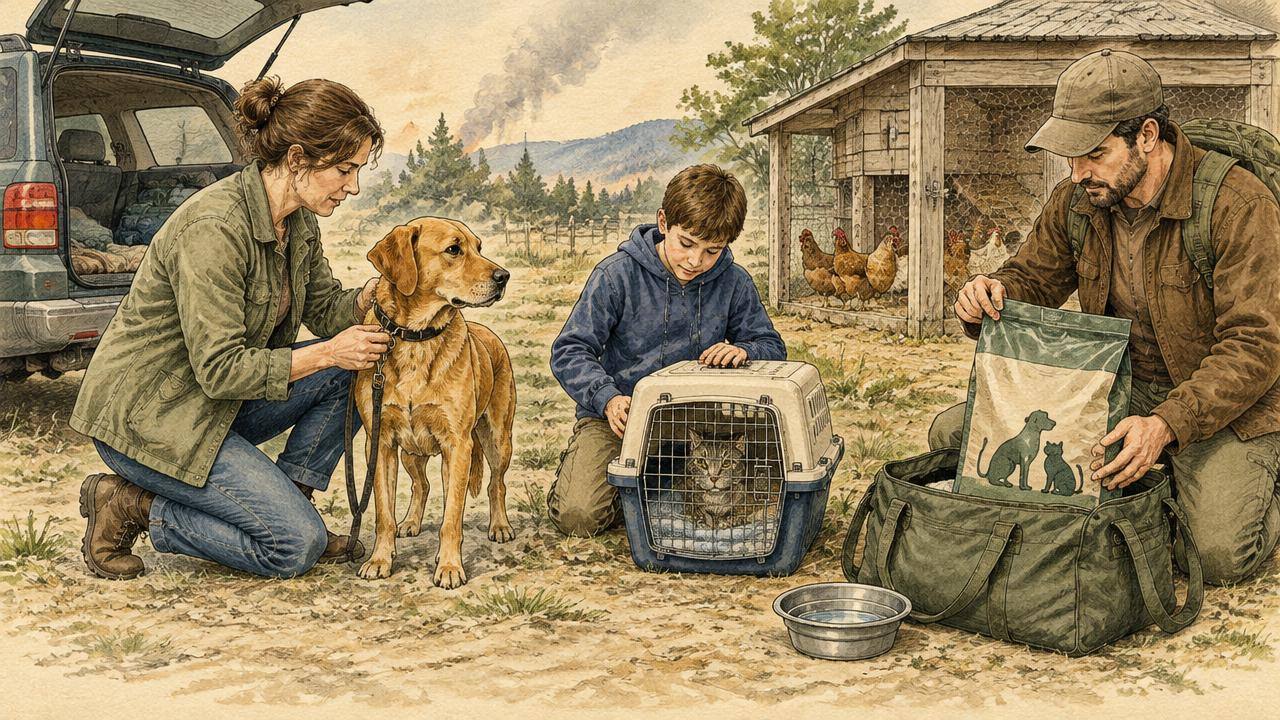
Pet Evacuation Kit and Plan
Never leave pets behind. Pack their kit and know which shelters and hotels accept animals.
Question 1
The goal
Evacuate safely with every pet and keep them healthy away from home.
Question 2
Materials
- Carrier or crate per pet
- Leash, harness, collar with ID tag
- 7 days of food and water
- Medicines and vet records
- Recent photo of you with pet
- Litter and pan / waste bags
Question 3
Substitutes
- Pillowcase for carrying a cat briefly
- Collapsible bowls
- Phone photos of records
Where to find it
| Material | Household | Wilderness | Urban / scavenged |
|---|---|---|---|
| Carrier | Laundry basket + sheet (short trips) | N/A | Pet store |
Question 4
Step by step
- 1
Microchip pets and register your current phone number.
- 2
Put an ID tag on every collar with your cell number.
- 3
Pack food, water (about 1 oz per pound of body weight daily for dogs and cats), bowls and medicines in a waterproof bin.
- 4
Add vaccination records, a photo of you with your pet (to prove ownership), and a familiar blanket or toy.
- 5
Find pet-friendly hotels, friends and shelters outside your area and save their numbers.
- 6
Practice getting pets into carriers so it's not a fight during an emergency.
- 7
Leave early — many shelters and roads won't take pets once an evacuation is mandatory.
- 8
Keep pets leashed or crated in new places; frightened animals bolt.
- 9
After returning home, check the yard for debris, wildlife and downed lines before letting pets out.
Saved steps go to My Survival Notebook.
Question 5
The science
Stressed animals behave unpredictably; familiar items and routines reduce stress hormones and escape attempts.
Question 6
Dangers & limits
- Never leave pets tied up during floods or storms.
- Hot cars kill pets in minutes.
- Watch for floodwater contamination and sharp debris.
Question 7
How you know it worked
Kit packed, carriers practiced, and three pet-friendly destinations saved.