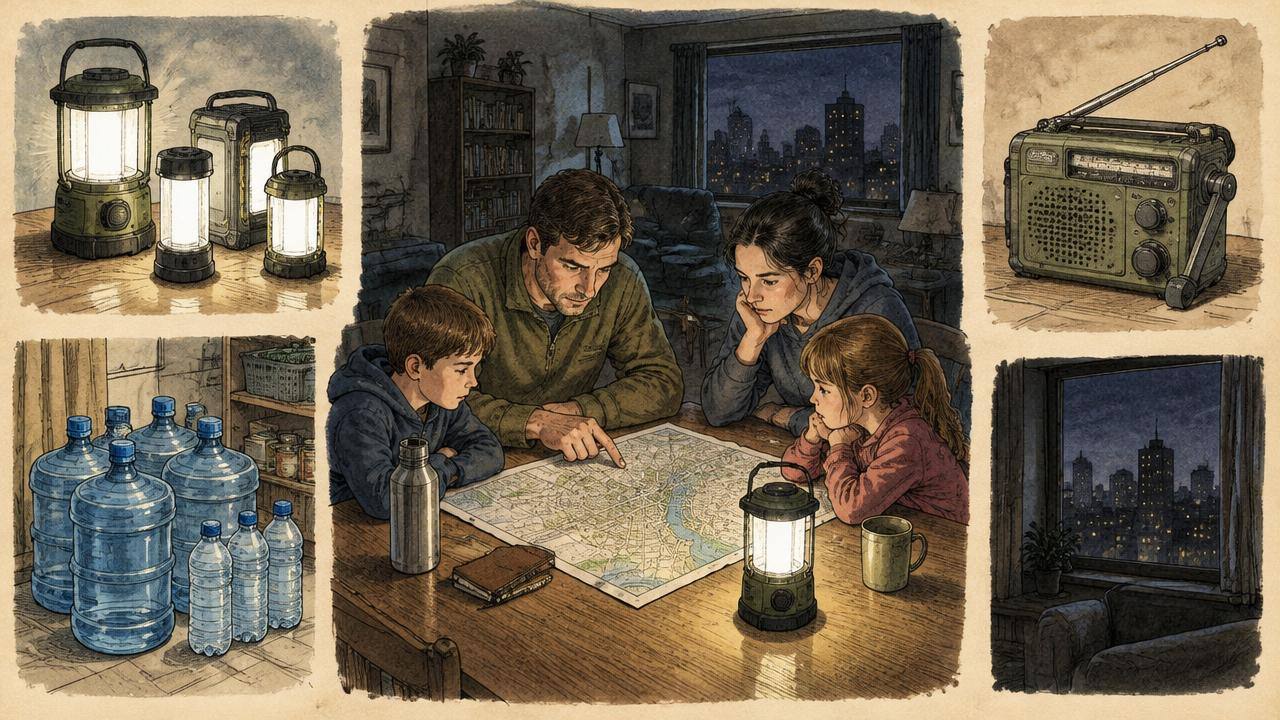
Apartment Blackout: The First 24 Hours
No elevator, no water pressure, no lights — how to manage a multi-day outage in a high-rise.
Question 1
The goal
Stay safe, fed and informed in an apartment without power.
Question 2
Materials
- Headlamp
- Stored water (pumps may fail)
- Battery radio
- Power bank
- Cooler
- Whistle
Question 3
Substitutes
- Fill pots and tub at first flicker
- Car charger in parking lot (outdoors)
- Library or community cooling/warming center
Where to find it
| Material | Household | Wilderness | Urban / scavenged |
|---|---|---|---|
| Water storage | Bathtub, pots | N/A | Corner store (buy early) |
Question 4
Step by step
- 1
As soon as power fails, fill the bathtub and pots — high-rise water pumps often stop.
- 2
Unplug sensitive electronics to protect them from surges when power returns; leave one light switched on to know.
- 3
Check on neighbors, especially older or disabled residents.
- 4
Use stairs, never elevators. Keep a headlamp in your pocket.
- 5
Keep fridge and freezer closed; follow the food safety lesson.
- 6
Listen to radio or check phone briefly for updates, then save battery with low-power mode.
- 7
In heat, stay on lower floors, close blinds by day, open windows at night, and use cooling centers.
- 8
In cold, close off unused rooms, layer up, and never use ovens, grills or camp stoves for heat.
- 9
Don't use candles in hallways or near curtains.
- 10
If you depend on powered medical equipment, go early to a location with power.
Saved steps go to My Survival Notebook.
Question 5
The science
High-rise water relies on electric booster pumps; gravity tanks empty within hours. Upper floors heat up quickly because warm air rises.
Question 6
Dangers & limits
- CO from indoor grills or generators.
- Stair falls in the dark.
- Heat illness on upper floors.
Question 7
How you know it worked
Water stored, neighbors checked, phones charged and food kept cold through the first day.